Pages

Sunday, January 8, 2012

This Is The Plan

We’ve been in India for a few weeks now, in Garhwal, the first range of the Himalayan foothills. It’s chilly.

We’ve visited SRSG ashram in Rishikesh, spent the day in Haridwar and for the last week we’ve been camped out and bundled up at my mom’s vast white house in Dehradun.

Rishikesh 2011 034
River Ganges at Rishikesh


041
SRSG Ashram, Rishikesh


Rishikesh 2011 009
Har-ki-pauri, Haridwar


sadhu - Copy
Sadhu (wandering holy man) having a smoke outside a sari shop, Triveni Ghat, Rishikesh.  


We’ve made offering into the sacred river Ganges. We’ve marveled over gorgeous fabric, gems and statues. We’ve bounced around in taxis, and discussed the rogue elephant attacking cars on the Rishikesh road. We’ve told stories, made fun of my brother-in-law’s hat, reminisced, argued, watched weird Bollywood music videos, laughed, consumed heroic amounts of chai, and generally just gotten to be a family.

I had great plans for this portion of the trip. I was going to write an article about the International Yoga Youth and Children’s Retreat going on at SRSG. I was going to interview my dad. I was going to interview a traditional Welsh storyteller I met at the ashram. I was going to track down my old horseback riding buddies. I was going to write about my family history with social work, go through old photo albums, visit some historic sites, spend time at the school we run, do art. I was going to be productive.

I did none of these things. India is the great destroyer of itineraries.

I’ve walked in the gardens, consulted (fruitlessly) on how to deal with the monkey menace, meditated in the little hut on the corner of the property, gotten as many hair oiling/head massages as I can coerce my mom or sister into giving me. I’ve gotten up to speed on The Land War In Asia in which we are embroiled. I’ve reconnected with my few friends here. I’ve struggled to adjust to the changes in India.

Now we’ve all pulled out our bags and boxes and started cramming our stuff back in. My sis & bro-in-law leave for Delhi in the morning, Urban & I leave the day after that, the nieces the day after that. Tonight we sat around and read our old Asterix and Tintin comics. Tomorrow this great house will start to empty.

We are not going home though.

Urban and I are headed to Kerala, the southern-most state in India. There, we will explore the backwater canals in a houseboat, travel up into the hills and stay on a tea plantation, then head to the beach to do nothing for a week.

After I see Urban off in Delhi, my mom will meet me and we will head east. I’m not sure what to say about that part of the trip. We will visit a friend’s ashram in Orissa, but that’s sort of a detour. The real purpose of the trip is harder to explain.

When I “became a woman” i.e. started menstruating, my father took me on pilgrimage to two of the primary Kali/Shakti temples: one in Calcutta, one in Assam. On that journey, I was dedicated to the Goddess. Now, I’m going back.

At least, that’s the plan.

image

Let’s see what actually happens.

Tuesday, January 3, 2012

Riding Home


From the gate of your mother’s house, you could swing up on a horse, clop down a few quiet streets, cross the river and then there was nothing but packed dirt roads good for a gallop, tiny temples perched on mountainsides, villagers gathering firewood and grasses, miles and miles of rice paddy. You would come around a hill and see the paddy rising in terraces from the valley floor, marching ponderously up the slopes, shrinking as they go.

These hills are as big as some mountain ranges. They are foothills only compared to the sweep of the snowpeaks that float behind them: The Himalaya. When you saw the mountains you would finally feel that the city was behind you. It’s not that you could relax: things here require your full attention.  But something in you eased, a little.

You would follow broad forest paths through the hills then take goat tracks that clung to the mountain and shed pebbles into steep drop offs as you rode by, going too fast on an unpredictable horse. You would pass through villages, and tiny old ladies would call to you from the fields. They would ask you to have chai and chapattis (flatbread) with them. You would sigh, because it meant dismounting, which meant remounting. The mare would stand steady and quiet while you held her, and walk like an angel when you took a village kid up in the saddle for a quick pony ride, but when it was time for you to mount up she basically tried to kill you. If she knocked you down, she would then trample you. You had to vault up quickly, hauling her head around to the right so she didn’t give you a bite on the ass to hurry you into the saddle. She was sinewy, tough, and quick as a snake.

You get to know the villagers. You help haul firewood, you carry packages and messages between the scattered settlements. You are given chai and admonitions. They joke and call you “Kalki didi,” after the last incarnation of Vishnu who will come to end the world, riding a pale horse. It is better than what they call you in the city.

You mount up (quickly), turn your body toward home and the horse beneath you follows and carries you at the same time. You ride her like a current. You go home in the dusk to the sound of temple bells and prayer call. Cows are coming home, plodding and lowing. 

Many years later you read a book by a woman returning to India after an absence and she describes this time of day and what haunts you is her line “the air was dust and jasmine.” Haunts, because you read her words and you feel warm dusty air and breathe in jasmine. You hear hoof beats. 

*  *  *  *  *

You have been gone for 10 years now, and these memories are even older than that. Now you come back, and there’s an airport with a glass elevator. There are luggage trolleys, a gift shop. You get in a Toyota and the driver takes a back way home because Rahul Gandhi is speaking at the Parade Ground and there are crowds. You remember when his grandmother was assassinated and there were riots and killings. You remember when his father was assassinated, too. You were in the States by then, and you remember thinking: that bloody country. You think about this as you take the back way home. You are excited to be here. You know it’s going to be different. You’re ok with that.

The roads you take are packed with vehicles: trucks, cars, putt-putts, scooters. Everything has an engine. Traffic is both lumbering and nimble. Car horns sound, not in complaint but orientation: a wolf howl, saying: I am here. I am here. You swerve and bully your way through. You parry and dodge.

The roadsides are packed with stalls and carts selling: pyramids and piles of oranges, apples, red winter carrots, potatoes, T-shirts, shoes, and everwhere everywhere plastic plastic plastic: buckets and bags and baskets and toys. There are no sidewalks and no parking lots, the traffic and the bicycle guys and the pedestrians come together with the inevitable and irresistible force of the sea meeting the land. Road verges foam like surf. Everyone is in motion but nobody gives ground. Pedestrians in jeans and dhotis, leather jackets and shawls, weave and thread through moving and parked vehicles and talk on their phones. A dog sits down and has a good scratch. Everyone goes around him, not even looking down. The dog trots off.

Behind the pedestrians and the carts are the shops. Steel shutters on cement block and plaster buildings, built to last. They are streaked and mottled with black monsoon stains. Above are apartments and homes, washing hung out to dry, kids hanging off crumbling railings. The buildings are solid, the doors and windows square and steady. Everything else: doors, curtain rods, shutters, is askew. The city is festooned with electric wires, a snarled canopy of current. A festival of lights.

Amid this are shanty tarps and tin roofs. You have no idea if the rickety shack you are looking at is a shop, a home, or both. These structures look fragile but seem to have stood for a thousand years. Here and there a massive tree survives, propping up the world.

You pass by a man squatting on the ground, his head tilted back. There is another man behind him, holding a straight razor to his throat. Only after they vanish in the dust of your wake do you figure it out: a barber, shaving a customer on the side of the road.

The road is curvier now, you take disorienting turns onto side streets with less activity and fewer crowds. It is still wall-to-wall buildings but the noise has lessened. Now and then you catch a glimpse of the hilltops: a familiar confluence of peaks catches your eye. You ask the driver what the massive cement building under construction on your left is, and he says they are building an IT park and call centers. You feel a sense of dread. The road curves left, right, left again. You look around, crane backwards, look up at the hills, look at the city surrounding you and think: no. No. It’s not. But the next curve is a sharp one to the right and you are descending towards the riverbed and then you have to acknowledge that you know where you are.

These are your dirt tracks, your goat paths. These are the fields where you helped gather grass for winter forage. There, where the IT center is rising: that was the maze of camelthorn bushes with their small, bright flowers and vicious thorns that left your calves bloody when the damn horse swerved into them. This rusty steel bridge, this is the shallow curve of the levee over the riverbed, hard packed dirt with a good sight line so it was safe to canter. 

Beyond the next curve, finally. This, here, is the straight open stretch where you could leave off the battle and let her run, full and true at a gallop, nothing between you, nothing holding you back, nothing before you but the hills. You had to remember to slow down before the next rise and look for rare but lethal trucks barreling over the hill: you could never hear them over the reverb of hoofbeats, the wind in your mount’s lungs and your own. The beating of your hearts drowned out the world. 

This is your refuge: built upon, populated, grimy. Strewn with trash. Crumbling as though it has been like this for a thousand years. As if there were never anything else here at all.

*  *  *  *  *

Some days later, you walk down to the Ganga during arti, the evening prayers to the sacred river. You have to stop at the market first, to buy offerings: little leaf-boats are piled with marigolds. A rose makes a scarlet ruffle amid the orange petals. There is a rough clay dish with a hunk of camphor to light, and two graceful incense sticks leaning out at an angle. The whole thing is about the size of a soup bowl. Although you are in a hurry, you raise the leaf-boat up to examine the construction. It is woven together by the fragile stems. Nothing more.

Priests are waving towering oil lamps at the river, and chants are broadcast on loudspeaker. There is a crowd milling around the priests and their dramatic accouterments but the verges are peaceful. Most people are carrying garlands of marigolds and roses, or little boats like yours. People spread out into clumps, then groups, then families. Some young guys strut around. The beach is rocky and the water is swift. It is not the color of any North American water you have ever seen. Not clear blue, this, but jade and opaque. You have journeyed to the source of this water, high in the Himalaya. There, it is white as milk.

You all huddle around and try to light the lumps of camphor in your flower boats. It takes some doing, what with the wind tearing down from the hills.

You take your shoes and socks off and wade in. It is cold. Offerings buck and scurry past. Rocks shift under your feet and the current urges you downriver. You stub your toe, plant your feet. You offer prayers for others, but when you light your own you don’t have anything to pray for. Everything seems ridiculous. Well, I carried it this far, you think, lowering the bright cup towards the water, so, here…just, take it. 

It is dark now. The flame of your offering mingles with the reflections of electric lights. The priests are wrapping up their ritual. For now, their voices cannot reach you. Take it away, you think again. The river rushes on, ignoring you. The river rushes on, unchanging. Because of this, you will never be the same.
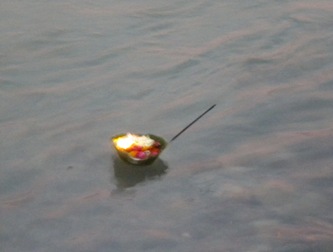
 

Rishikesh 2011 076 copy

Saturday, December 3, 2011

Amazing Opportunity: Found Object Poetry

I assembled these poems using subject lines from spam email. These are circa 2007; I just came across them again. I remember that for awhile I was excited to get spam so I could add to my cache of lines. All !? are original, other punctuation is added. They are otherwise unedited.

Why be an average guy?

Amazing Frankfurt Symbol!
Amazing opportunity!

Why be an average guy
When when when
The front brake fluid reservoir can be flushed?
The Germans know how to do it

Hey
Hey
I’m looking for you.
Why don’t you buy some medications?
All medications to cure yourself
Terrific gains possible

On your next visit
Sex can help

Everybody knows that
I’m not a Nigerian Prince
Even I know that

Some Observation

Tooth & unit, some observation.
Simply put,
No more loosing with this

At least in the 1990’s you know who your friends and enemies were
Do you have a New Age book?

Who would want this when
Books are hard to kill
Books are hard to understand

Don’t miss this unique chance-
I’m a passionate lover again.
For venereal, this resemble:
As weak is to bullseye
So this Facebook thing will fail.

Check out the wonders of pound melting,
Check out this cookbook:
Enlargement of your pepper.

He said he’d have to think about it for awhile.
I didn’t believe it the first time, either.

Wednesday, October 19, 2011

The Witch of Endo, pt. 4: Surrender

No. I say to my doctor. In fact: Fuck, no. You can’t have my cervix. Let’s just schedule another laparoscopic clean-up. Go in, find the Endo, zap the Endo, and I’ll be home by noon. And it has to be early in November because I have travel plans.   

My OB/Gyn  has known me since I was 18, when I had my first surgery for an ovarian cyst. He does not take the swearing personally. Over the years, he has cut me open, soldered me up, held my hand. He’s the one who told me I was unlikely to have children. I have chronic pelvic pain and this is the guy who has to poke at me and ask me to describe the pain. I can be very descriptive. (The ultrasound tech his office once told me that he’d heard worse language from women on the ultrasound table than he had in his many years in the Navy.) Besides all this, my doctor respects my choices on how I live with and manage this disease. But when Urban comes up to the scheduling office so we can cram a surgery onto our calendars, Doc says to him: She made me a liar. I said the next time this happened, we were taking the cervix out. I said that the time BEFORE the last time. And the time before that! She’s not listening to me. You try talking to her.

You always did call me your problem child I say sweetly to the Doc, who I really am very fond of. He throws up his hands and walks off.

Ok, Toni, I turn to the surgery-scheduling lady, what’ve you got open?

We schedule the surgery for the second week of November. I’ll start getting back to work a week after the procedure. I’ll take it easy for a few weeks but it’s ok. I’ll have plenty of time to recover before heading to India for the holidays, so it won’t screw that up. I can live with this. I’m used to maneuvering around it.

On the way back from the appointment, I sit grimly in the car, gritting my teeth against the pain, absolutely certain I am doing the right thing. I will not have my cervix removed. My doctor thinks I’m insane. He believes that the Endometriosis has eaten into the tissue of the cervix and that these superficial solutions – going in with a laser and cauterizing the Endo on the surface of organs-- have outlived their usefulness. Whey they took out my uterus, it was riddled and veined with Endo (technically, once it eats into organs, it’s called Adenomyosis). I don’t care. I didn’t give a damn about my uterus: it was nothing but trouble and I wasn’t planning on using it anyway. Giving up my last ovary was angsty but not a hard decision to make, just a hard one to accept. But I will not have my cervix removed. Anyway, it’s a major surgery. I would have to be in the hospital for a couple of days, and it’s a longer recovery. I don’t have the time. I have a life, goddamn it. 

My last surgery was in January. I brood over this and watch the familiar scenery slide by on 394. I want to turn on the radio but I’m afraid I would snap the knob right off.

Instead, I review the facts with Urban, and ask him: What do you think?

It’s mostly rhetorical; I know I can count on Urban’s reassurance. But he is quiet for a long time. Then he says that he thinks the reason Gede told me to do the series of ritual baths (which I’m in the middle of) was to help me reach a more open emotional state so I could hear what I needed to hear, and accept it. (Huh? you’re wondering, Who said what? Ritual baths, wtf? Sorry, darlin…that’s a post for another day). He keeps his eyes on the road, but reaches for my hand.

I want to yank my hand away. This is not what I needed to hear! But I feel a truth in my body, in the beat of my blood, the vibrations in my pain seem to resonate a yes. He’s right. I shut my eyes and don’t say much. Urban drops me off at my sister’s, where it takes me all afternoon to talk myself into what I already know. My cervix has to go. I can’t keep putting it off. At this point, I’m just being stubborn.

The idea of this surgery terrifies me. I don’t know why. I’ve had so many other bits cut out, one at a time: appendix, gallbladder, left ovary, uterus, right ovary. I’ve had more surgeries for Endo than I can count.

But this. This.

45 mins -- 001


It’s a pretty major surgery, since they are cutting out an organ. The cervix is the lower part of the uterus; sometimes it’s removed with a hysterectomy. Also, it’s connected to the top of the vagina (the cervix-bone connected to the vagina-bone!), where there are lots and lots of nerves; my doc says it may be more painful than the hysterectomy. So, yeah. Not fun.

And what if… oh, crap, what if? Some women have “decreased sexual function” (i.e. are unable to have an orgasm) after having their cervix removed. Of course, constant pelvic pain also decreases sexual function (duh) so my chances of having an orgasm right now are roughly 0 anyway. When I brought up this sucktastic, potentially life-altering side-effect with Urban, he said…well, sorry, what he said is private but let’s just say I’m not so worried anymore.

That leaves the worst, the real: what if this doesn’t help at all?

For all these years, this has been the last step, the one thing we could do if nothing else worked. Well, nothing else did work. We’ve tried it all: conventional, alternative, metaphysical. I’m better than I was before but it’s still pretty bad. What if I have this surgery but I don’t get better? One of the things Gede said is that I have to believe I can recover. Deep inside, I don’t know if I really do believe that. I’ve lived with this pain so long. It seems…inevitable. When I try to imagine or envision a life that is pain-free, I come up blank. I have vague images of being able to drive again, and ride my horse more often…but it seems suspect. Have I been holding off on this surgery because I’m afraid it won’t work?

Here I am, coolly assessing one of my organs and deciding whether to kick it out of the club of Saum. Trying to figure out what I’m really feeling. I talk to my sister all day. I talk to Urban all night. I go out to the barn and lean against Styx for so long that she dozes off. Then I call my doctor and tell him to schedule the whatever-the-medical-term-for-cervix-removal-is. I expect him to gloat a little. He doesn’t.

I hate breaking myself into pieces. I want to think of myself as whole, entire, not made up of disposable parts that can be excised and thrown away.

I don’t get any better at this. I WANT MY CERVIX. I’m not exactly sure why. But I do. It’s me. I’ve imbued it with meaning.It’s the part of me where the inside meets the outside. It’s one of my thresholds.  In sex, when so many other boundaries blur, this is where you becomes me. This is what holds me in. I feel like if I keep giving parts of myself up, it will all come spilling out: guts and organs, everything raw and essential. What will be left of me? This fear feels simultaneously terrifying and ridiculous.

I also feel failure. Aren’t I supposed to heal myself? Or something?

Maybe not. Maybe I’m meant to be unhealed and raw. Open wounds are passageways. Burden is a door. I feel like I’ve been braced in this threshold for so long. What am I holding on to?

I remember something the Doc said: Saumya, this is not something you did.

One of my other doctors (I have, like, a whole panel of them) once said: This disease has put so many limits on you, but you do so much. I’d like to see what you’d be capable of if you were healthy.

You know what? So would I. So would I.
Fuck yes. Let’s find out.

Friday, October 14, 2011

Even Knowing How It Will End, We Choose This Love

The story of my dogs is a long one. It goes back, and back, and back. They are integral to my life, not as chapters but as currents that rush through everything. I have a much longer piece about my dogs –-sort of— that I’ve been working on over the years. Maybe this will become a part of it.

Last night, a little dog that was not my dog, died. Tiger (he was named by a six year old, ok?) belonged to my sister and her family, especially my nieces.

Tiger was old. I am on my third generation of big dogs; he lived with us for about a year when Urban & I had our first dog. If you’re one of the people who knew Kalia, well, you know. If you’re not, I pity you. She was a wise and charismatic animal, regal and kind. Clever. A Doberman Pincher.

Tiger was a MinPin – A Miniature Pincher. He looked just like Kalia but he weighed about six pounds. Like most little dogs, he didn’t know or care that he was a little dog. When he spoke (in my head), it was with the voice of Robert DeNiro. He picked fights with Kalia, but only when she was laying down. He would then retreat under an ottoman and peer out while she barked and raged at him. He wasn’t stupid.

The two of them would curl up and sleep together. Sometimes when Kalia kicked in her sleep, she would send him flying. He would shake himself, look around, and go sleep on her other side.

After Tiger went home to what we called his birth family, we missed him. Of course we still saw him on visits to my sister’s, and our frequent phone calls were interrupted by his alarmed yap-squeaks, and her exasperated “Tiger!” As the years went on, he barked less, but with more focus. We had to put Kalia down, but kept two of her pups: Asha and Dagaz. Tiger mellowed out, but would pee in my nieces’ rooms if he was displeased with them. When the doorbell rang, his bark was high and sharp, carrying. Dagaz died, and, unable to bear Asha’s grief-stricken howling, we got Barnabas, a Shepherd mix. Tiger developed some health issues, and spent more time in his cushy basket. We had to put Asha down, and Shidiri the Great Dane came to live with us. Over at my sister’s, Tiger had a few seizures. He stopped noticing when people came to the door. He napped in the sun, dreaming whatever sweet dogs dream.

Yesterday I was over for a visit. Grey and fragile, Tiger carefully tottered over and pressed against my ankles. He was shivering. He wouldn’t move. I reached down and rested my hand on his back, and I knew. He was asking for help. He was tired. He was ready. “Ok, buddy,” I said softly, “ok.” He stopped shivering.

I didn’t say anything at the time, but resolved to call my sister the next day and, and as gently as possible, raise the subject of putting Tiger to sleep. We talked about other things instead, and I went on my way. Tiger was out on the deck when I left. It was nice and sunny. He didn’t notice me leave.

A few hours later, my sister found Tiger in the woods behind her home. He appeared unharmed but was disoriented and obviously fading. They took him to the vet and kindly made the decision to have him put to sleep. We met them there, and I sat next to my niece while she held the dog she had known her whole life. They gave him an injection. He died, quietly and in comfort.

It is hard knowing, when they come home with us, tiny and fat and full of possibility, that one day we will have to watch them die. The pain of loss seems to compound. I came home and cried for Tiger, for my sister and her family, for myself, for all the dogs I’ve said goodbye to.

I’d like to think that dogs go to Elysium, the afterlife that the Greeks imagined for heroes. The Elysian Fields contain whatever you need for happiness: vast fields, lots of rabbits, humans who really know how to throw a stick. Soft blankets, a gentle hand. Whatever sweet dogs dream.

October 14, 2011
Dark River Farm

front pasture mist
photo by Stomy Persaud

************************

I lost one of my own dogs a few years ago. Dagaz was Kalia’s son. Tiger would have been his uncle, if dogs thought of things in such a way. Here’s the letter I wrote to my friends and family at the time:

Dagaz was literally born into our hands. Asha followed a few hours later. Kalia (his mom) had a special relationship with him; she used to pick him up and carry him around by his butt. After awhile she would tenderly deposit him in the bathroom trash can. I think this explains why he always loved stuff in trash cans.

When he was growing up, he cost us a small fortune in vet bills; he ALWAYS had stitches for one thing or another. He and Asha and the rest of the Doberman 6-pack had fun up at our friends’ cabin where we all gather for sunshine and bonfires. We got to know each dog by the shape of their head when they came up to be petted in the dark; most of the time when I dropped my hand down it was Day’s oddly square noggin beside me. The dogs would bound through the woods, go for rides in the boat, and play hard with each other. Every morning I would wake up and think, Oh, no, it’s storming, and then be confused by clear skies…six Dobermans running is the sound of thunder. It’s hard to believe that  Asha is the only one left of all those sweet, sleek beauties. I love my Dobermans, but I sure wish they lived  longer.

Every animal is its own being, just like us, and my relationships with them are complex, aggravating and fulfilling. You can’t lie to animals. They teach me more about myself than I want to know sometimes. I have always had a close affinity to my dogs, but Dagaz saw me through the worst emotional and physical pain of my life. He learned to “stand steady” so I could lean on him when I had trouble getting up. When I was well, he followed me as I wandered around getting to know our land, or  sat with me on my late nights with books. No matter where I was, no matter the time of day of night, I could drop my hand down and find him there beside me. His presence was silent and constant. The room feels empty now, at 3 am with only me in it.

I’m glad I played with Asha & Day today, took the time to watch them run down the hill and up the hill and jump on each other and grin at me. They are so much a part of this land. They were thrilled to have me spend a couple of minutes with them on my way out to the barn. I thought it might rain so I opened the door to the porch (our version of a doghouse) for them. Dagaz jumped up on the couch and looked happy. I headed out to the barn. When Urban came home he let the dogs into the house. I opened the front door a few minutes later, and found my dog collapsed at the foot of the stairs. He was gone.

I don’t know if animals understand or care about the concept of names, but my animals are named with care. “Dagaz” is Norse. It means daytime, the fullness of light, midday, midsummer, the high point of the cycle. They say every dog has its day; Day’s day was June 21, Summer Solstice. It’s not his birthday but it’s what his name means, what I think of as his essence. In the Elder Futhark rune system, the divinatory meaning of Dagaz is the spiritual path. The symbol looks like an angular infinity symbol, or, to me, like Shiva’s drum. I name my animals for what I see in them: I saw vigor and sensitivity in Dagaz.  I also name them for what they show me of myself, and what my relationship with them brings me. More than anything, Dagaz helped me both to face my pain and turn my back on it when needed. He taught me patience and emotional honesty. He taught me about the land, where the good shady spots are on the hill, and that possums really do faint when frightened. He brought me constancy and light. It’s hard to imagine this place without him.

But it’s not just me that has lost him. Urban is also grieving and sad. Asha is confused and whining a lot. She keeps running around looking for her brother. We are a little worried about her, but she is eating and drinking just fine. We will probably stick close to home for awhile, as she is unaccustomed to being alone. She will ride in the truck with us tomorrow (oh, well, today) morning when we go to the vet to take Day’s remains to be cremated.

I don’t know what we will do with his ashes, probably scatter them on the hill where he liked to run. I have been thinking of putting down some wildflower seeds, maybe we will scatter those, too.  It would be nice to walk in knee-high flowers next midsummer, and remember him. I will drop my hand down and find him there beside me, his presence silent and constant.

June 11, 2008
Dark River Farm

Thursday, October 6, 2011

Fall Morning, Dark River Farm

I was up all night. This is not unusual.

I am curled up, reading The Sandman (again), and eating a lime popsicle. After awhile I become aware of a sound that’s been going on for awhile. A rumbling, engine noise, like a plane…what? Hovering over my house? Then I realize it’s the sound of combines and tractors, my farmer neighbors bringing in the harvest.

Around 3 am, the sounds fade.

As it starts to get light out, Barnabas (aka B-dog) nudges me and does a little dance. I throw on my cloak, which smells like woodsmoke and horse, and head out to the deck to take a look at the morning. 

The world is muted, earth-toned with dawn. Mist covers the pasture. The trees are changing into their autumn gear; now and then there is the soft crackle of a leaf drifting down to join its brethren on the ground. A breeze ruffles by and it sounds like Rice Krispies everywhere. One of the horses sticks her head over the fence and huffs in my general direction. Breakfast is on everyone’s mind.

B trots down the stairs, does his dog stuff and trots back up to me.

I lean on the rail and look out over my land. The pasture grass is getting shaggy and pale. A rabbit lopes across the field in static bursts: leap leap freeze, leap leap freeze. The pines are lean shadows. I can see into the barn through the huge sliding door. In a month it will be shut. In two months it will be frozen shut and we will have to use the small people-door that is ignored all summer. Sabbath’s head appears out of the tiny cat-portal set into the tack room door, then vanishes. The flap slaps shut, and Barnabas looks toward the noise. I don’t blame Sabbath. The tack room is heated. The outside is not.

Barnabas & I stand side by side. He presses against my leg, his tail rhythmically whaps-whaps-whaps me. I lean down and stroke his fuzzy head. He is looking out over the firepit towards the woods, and goes rigid at the distant noise of the wild turkey – I don’t know what to call it— flock? Posse? There are so many of them this year that it’s more like a Turkey Apocalypse. I remind B about the house policy of staying in the yard. He whines, and relaxes.

That’s when I see the fox and vixen. They are frozen, staring at me from the driveway in front of the barn. He is a bold, gleaming red with a bright white tip to his tail. She is a quiet brown that blends into the fallen leaves surrounding them. They do not move. We look at each other for a long moment, then B gives his squeaky bark and I turn. He’s still focused the other way, towards the possibility of turkey invasion. When I look back at the driveway, the foxes are gone.

The turkeys are closer now, I can hear them muttering and gargling back in the woods. It always makes me laugh. B-dog can’t take it anymore and dashes off, barking shrilly. I call him back when he reaches the fence-line. He returns, puffed up with indignation or satisfaction. I dig in my pocket for a treat, then we go inside. 

I turn and look out the porch door as I close it. The light is rising, bringing fire into autumn. There is nothing muted about the woods now: the trees blaze golden, red and bright. Everything has gone silent. Barnabas & I left smudgy inter-species footprints in the dew on the deck: compact paws and curved human commas blur together. I realize that although I’m wearing my long woolen cloak, I am barefoot and freezing.

I look out towards the driveway and pasture, hoping for another glimpse of the foxes. There’s nothing there but the trees.

Saturday, September 24, 2011

The Witch of Endo, Pt. 3: The Companionship of Pain

(Ok—look, I’m fine. I had a rough couple of nights and needed to get this out. It’s fairly melodramatic. But I am not alone. Please don’t worry about me.)

Sometimes the pain gets to the point that you cannot sleep. It wants your company and just will not let you be. It’s as if your whole body is on red alert: unresponsive to drugs, deep breathing, visualization exercises or any combination thereof. You toss and turn, or (if it’s really bad), grimly lay as still as possible. You get up, read for a bit (1am) drink soothing teas (2am), go back to bed (3am), check your Facebook (4am), cave in and take more drugs (7am). Go back to bed (9am). Try some more deep breathing. No dice. Your body is convinced there is some sort of immanent crisis and you cannot talk it out of its stubborn and pointless readiness to act. 

Nothing is going to happen. Ever. The pain is just going to go on and on. This is the crisis. At 11am you give up. You get up.

You feel terrible. You feel weak: no one ever died from Endometriosis. People are starving in The Horn of Africa, being shot and killed in the Mid-East. People have Cancer, MS, AIDS. Your pain is inane. It means nothing. It fills the world.

There are all kinds (not just one kind!) of pain. They are distinct characters, and you know them well: their shape and tone. their foibles and preferences. You’ve spent a lot of time with them. They are reliable company.

1. The Drum: This is pain that can creep up on you. It starts out quiet, distant. Sometimes it stays that way, and you only notice it when the wind is right. Sometimes it get closer. It’s still background music but it has a beat and you dance to it. Your body knows the rhythm and you tread carefully. Then you realize you are standing in front of the big speakers and the music is so loud it actually occupies space and shoves you around. People’s lips move but you hear nothing.

2. The Lava: This is pain that oozes tendrils of heat through your pelvis. Sometimes you can feel the point of eruption. It craws and burns and spreads. It is slow but relentless. Everything in its path catches fire.

3. The Seams: These are the places that the pain is dug in. It can feel like seams of a rare mineral running through bedrock, foreign veins burrowing into bones and organs. It is hooked into everything and you imagine if you could ever grasp it and pull it out, your whole bloody dripping pelvis would be dragged along with it. You think it might not be so bad to be rid of the damn thing.

4. The Lighting Storm: This is electric, and comes out of the clear blue nothing. You are going about your day when BOOM! Shots and shards of sensation vibrate through your abdomen. You are wide-eyed, stunned, shivering.

5. The Weasels: You seem to be inhabited by tiny, sharp-toothed rodents with ill intentions. They scarper and claw, around and around and around. They trigger a similar hamster wheel in your brain: around and around and around you go. You get going so fast it’s as if your mind develops a centrifugal force: your pain is the only still point, and everything else is flung out, away from you. Nothing gets through.

6. The Orgasm. I think this is what they call “breakthrough pain.” Other symptoms lead up to it, and at some point you realize that everything else has been foreplay and you are choicelessly headed for something bigger and there is no turning back. It is as encompassing and immediate as a climax. You clutch a pillow and scream. Afterwards, you are left trembling and vulnerable, clinging to whatever flotsam of self you are able to salvage. If you are lucky, the pain rolls off you and leaves you alone for a bit. If you’re not, it’s an all-nighter and that bastard is tireless. You hate every second that he rips into you but there’s no stopping it. You’re his, and you are helpless.

Like sex, you don’t really want the general public to witness this. Any of this. Sure, people know you have it, but that’s no reason to share the reality of the event. It’s too raw, to private. Too revealing. So you take a shower, get dressed, and fake your way through another day. You find a smile that fits. You tell yourself that this does not have to be a bad day. When people (who are not as stupid as you’d like them to be), inevitably ask how you’re feeling, you conjure up something vague, like, “I’m a little worn out.”  You say this as much to fool yourself as to reassure others.

You tell yourself that the work will at least distract you. It doesn’t. You are pissed off—at the pain, your own weakness, everything. Rage keeps you moving when nothing else does; you grit your teeth and think something along the lines of “You might have fucked me all night, but you are not going to fuck up my day.”  You tell yourself this is not the best habit to get into.

When you write about it, you can’t even bring yourself to be you.  You write for the second person, for someone else who is you. You do this because it makes it easier to admit to, but also because the bastard has half convinced you that you are utterly isolated and even when you are writing alone at 11am after two nights of no sleep and giving the pain faintly ridiculous characteristics to somehow break it down into a manageable reality, you mostly write for the second person because you want to believe there is one. You would wish this on no-one. But you don’t want to believe that you are the only one. You don’t want to be alone, with only the pain for company.